
Federal Bureau Release Paths
The Federal Bureau of Prisons manages sentenced federal custody. A defendant whose case was filed in the Eastern District of Louisiana can be designated to a BOP facility anywhere in the country. The person may first have been held by USMS in a local contract jail, then entered BOP custody after sentencing. These stages produce separate records. The OPSO archive shows an Orleans jail booking, USMS handles much federal pretrial custody, and BOP shows the sentenced-prison phase.
A BOP exit can be a release at the end of the imprisonment term, a movement to a community setting within the federal correctional framework, transfer to another authority, or another legal event reflected in the federal record. A person no longer in BOP custody can still be on supervised release under the federal court. The judgment and later docket entries explain the legal term, while the locator supplies the federal custody date and location fields.
| Question | Best source |
|---|---|
| Was the person in sentenced federal custody? | BOP locator by number or name. |
| What date does BOP report? | BOP result and record explanation. |
| Why was release authorized? | Federal judgment, release order, or docket event. |
| Did supervision continue? | Eastern District court and federal supervision record. |
| Was this only a pretrial move? | Federal docket and USMS custody route. |
Search Federal Bureau Releases
The BOP Inmate Locator searches by BOP register number, DCDC number, FBI number, or INS number. It also accepts a name with optional age, race, and sex fields. A number search is usually the best guard against a false match. When searching by name, compare all returned identity fields and the federal court record before choosing a person.
- Collect the full name, known variants, BOP register number, birth details, and Eastern District case number.
- Search by the most precise federal number. Use the name route only when a number is not available.
- Compare name, register number, age, race, sex, location, and release date on the matching result.
- Read a past or future date according to the official BOP explanation, and save the date accessed.
- Match the result to the federal judgment or docket, then use BOP records channels if a formal custody record is required.
The captured BOP name and number search shows both lookup routes.
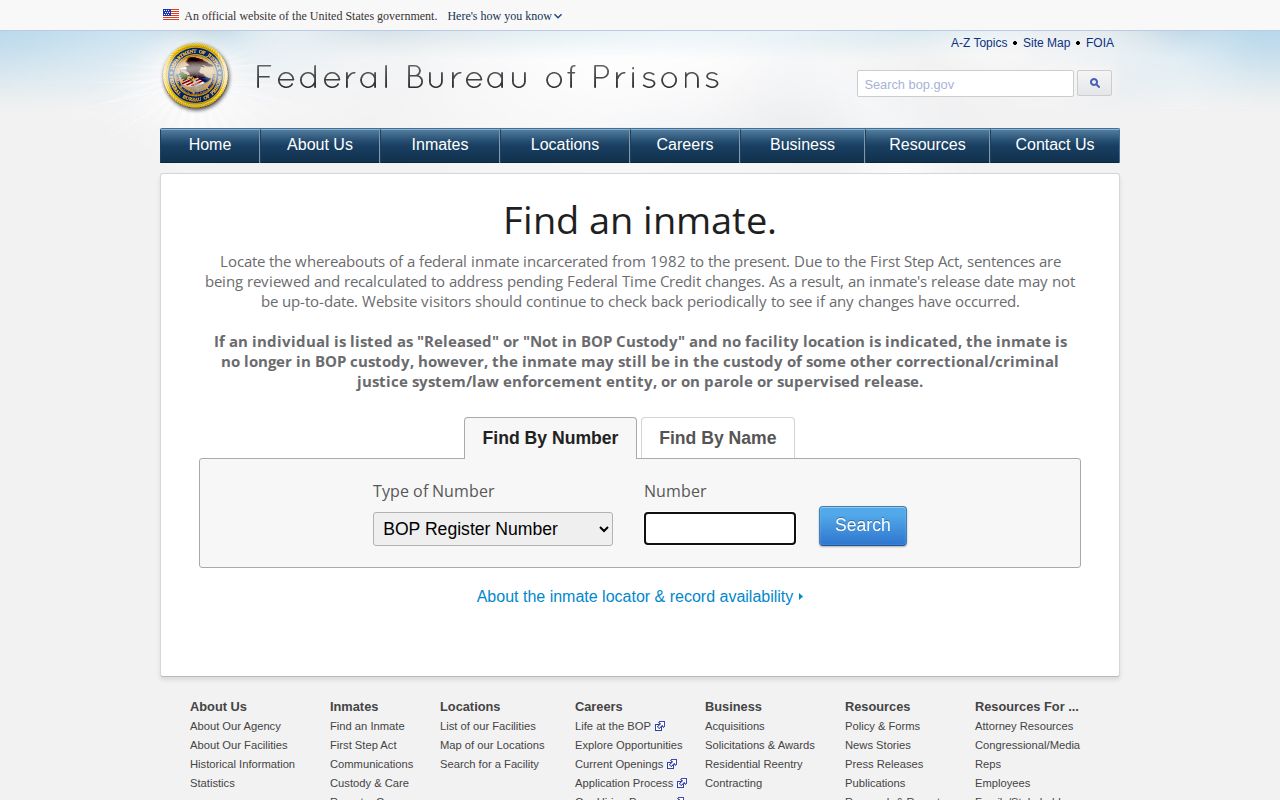
The number fields let a searcher tie the result to a federal identity rather than rely on a common name.
Keep the register number exactly as displayed. It is the bridge between the locator, BOP records, the federal judgment, and later correspondence. A name search can return people from unrelated districts, and the place of confinement may be far from New Orleans. The Eastern District case number confirms the Orleans connection; the BOP number confirms the federal custody identity.
Federal Bureau Past Release Dates
BOP results can include name, register number, age, race, sex, release date, and location. The official BOP record explanation says a past date with no facility means release occurred on that date and the person is no longer in BOP custody. A “Released” label likewise means no longer in BOP custody. It does not prove that federal supervision ended or that no other agency took custody.
The corresponding captured explanation preserves that distinction.
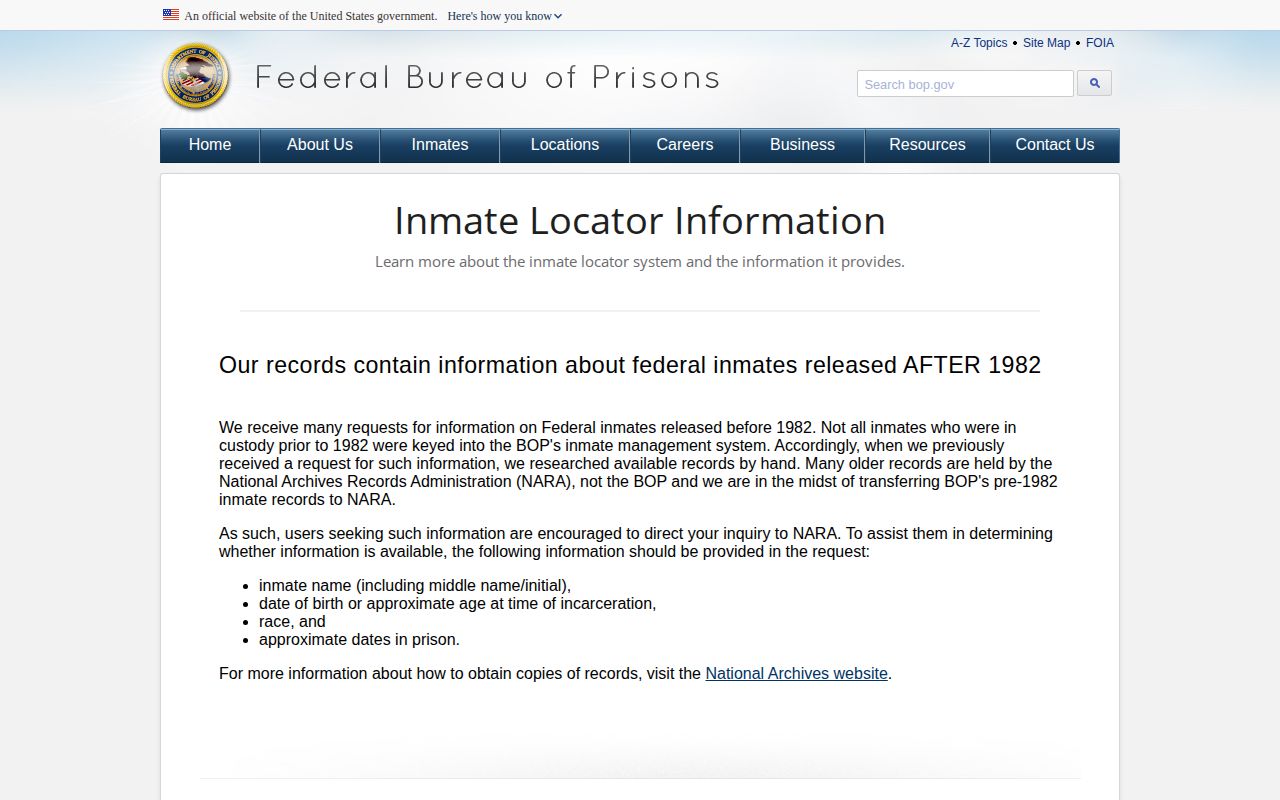
The explanation turns the locator date into a clearer federal custody fact, while the court docket remains necessary for the sentence and supervision that follow.
Federal Bureau Release Coverage
BOP says the locator covers federal inmates released from 1982 forward. Many older records were never entered and may instead be held by the National Archives. A person released before that point should not be declared missing from federal records merely because the modern locator returns no match. Use the court case, archives, and a focused BOP or archival request.
A future BOP date is projected and can change. Sentence recalculation, court action, earned credits, First Step Act calculations, or other lawful changes can affect it. Preserve the label and access date. If the person has already left confinement, use the past release record and federal docket rather than an earlier screenshot of a projected date.
For a pre-1982 event, identify the federal district, conviction date, sentence, institution if known, and any old register number before approaching the National Archives. The absence of a modern locator row says little about that older period. Court archives can also preserve the judgment and later orders, even when BOP never entered the custody record into its current system.
- Register number
- The federal identifier used to distinguish BOP records.
- Projected date
- A future estimate that can change before release.
- Past release date
- The date BOP says the person left its custody when the result meets its stated conditions.
- Supervised release
- A court-ordered period of federal community supervision after imprisonment.
Federal Bureau and Orleans Court
The Eastern District of Louisiana docket is the local federal case trail. It can provide the judgment, imprisonment term, release order, sentence changes, and supervised-release information. BOP’s locator is stronger for the custody date and federal facility status. Neither source answers every question alone. Pair the register number with the district case number and preserve the exact agency attached to each date.
A defendant can also leave an Orleans-area contract jail because USMS moved the person, not because BOP released the person. Federal pretrial release is shown by the court order and USMS confirmation rather than by BOP. The U.S. Marshals Service custody route covers that stage. Only use the BOP path once the facts point to sentenced federal custody.
One case may therefore contain three distinct milestones: release from an Orleans or contract jail into federal control, delivery by USMS to BOP after sentencing, and eventual release from BOP. Add federal supervised release as a fourth stage when the judgment imposes it. A single “release date” cannot safely stand for all four.
Federal Bureau Release Records
For a formal federal record, identify the person, register number, court and case number, relevant facility if known, and date range. Ask for releasable custody and release information rather than an undefined full file. The locator is free for a basic search and is available online around the clock subject to maintenance. Formal copies can fall under federal records procedures and applicable fees.
Privacy and law-enforcement exemptions can limit disclosure. Ask the agency to cite the basis for any withholding and provide segregable portions when the law allows. The federal court record may be faster for the legal basis, while BOP is the custodian for its sentenced-custody data. Do not promise a federal prisoner photograph. A release inquiry is best supported by identity fields, the BOP date, and the court disposition.
A useful request asks for the releasable designation, custody, transfer, and release data for a specified period. It should distinguish an actual release from a movement between institutions. If the person was transferred to ICE, a state authority, or another custodian, request the receiving agency name and date to the extent releasable. Then confirm that next event in the receiving system rather than treating BOP departure as the end of all custody.
After Federal Bureau Release
A person can leave BOP custody and begin supervised release. The sentencing court sets that term, and the federal probation system administers it. A later violation, warrant, or court order can change the person’s status, but it does not erase the original BOP release event. Keep prison release and supervision as separate phases.
Another authority can also receive the person. An immigration matter, state case, or local warrant can create a new custody record. Search the system named in the transfer or court file. For a complete Orleans-linked sequence across OPSO, federal custody, and later release, use the Orleans Parish released-inmate search and label each source rather than combining the dates.
BOP is also different from VINELink. Louisiana VINE relays participating Louisiana agency information, while the BOP locator is the federal sentenced-custody source. A missing VINELink record does not speak to federal release. The federal register number, BOP date, and Eastern District docket remain the reliable chain for a person whose Orleans connection comes from a federal case.
Keep a copy of the locator result with the access date. Dynamic results can change, and an old image of a future date should never outrank the later official release record. When facts conflict, ask BOP for the releasable custody event and use the federal court to resolve the governing judgment.