
Orleans Parole Versus Probation
Probation and parole both permit community supervision, but they arise from different decisions. An Orleans Parish judge imposes probation in a criminal case. It may take the place of jail or follow a period in custody. Parole is a conditional release from a state prison term after action by Louisiana's Committee on Parole. A person released by diminution, often called good time, may also be supervised as if on parole for the balance of the full term under R.S. 15:571.5. The label on the record matters because it identifies who can confirm the status.
The sentencing court remains the key source for Orleans Parish probation. Court minutes can state the term, start date, conditions, termination, or a later revocation. For parole, use the Committee docket and minutes with Louisiana Department of Public Safety and Corrections records. A full-term discharge may end corrections supervision, but another case or duty may still exist. Do not treat release from Orleans Justice Center as proof that either supervision began or ended.
| Point | Probation | Parole |
|---|---|---|
| Who authorizes it | The sentencing court | Louisiana Committee on Parole, or statute for diminution supervision |
| When it occurs | Instead of or after confinement | After release from part of a prison term |
| Best record | Court minute entry or probation order | Committee decision plus DPS&C status |
| Who supervises | DPS&C Division of Probation and Parole | DPS&C Division of Probation and Parole |
| How it ends | Court termination, satisfaction, or discharge | DPS&C or Committee discharge at the lawful end |
- Parole
- Conditional community release during a state prison sentence.
- Probation
- Court-ordered community supervision instead of or after confinement.
- Discharge
- The formal end of a custody or supervision term, as defined by the issuing agency.
- Diminution
- A sentence reduction earned under Louisiana good-time law.
Check Orleans Post-Release Supervision
A sound check starts with the form of release, not a broad name search. Louisiana DPS&C routes its public online search through Louisiana VINE. The official Inmate Information page says the data may include people in prison and people under probation or parole supervision. It updates on a stated daily cycle, but it is not a complete archive of everyone ever supervised. A missing result is not proof that supervision ended.
Use a DPS&C number when known. Names can match. Compare the agency, age, case details, and any displayed supervision information. For probation, also inspect the Orleans Criminal District Court record. For parole, check the official Board of Pardons and Committee on Parole materials. A hearing date is not a release date, and a grant can still be followed by processing, a hold, or a later action.
- Identify the full legal name, date of birth, Orleans case number, and DPS&C number if lawfully known.
- Read the sentencing court minute entry to determine whether the court ordered probation.
- Search Louisiana VINE through the DPS&C page and record the status exactly as shown.
- For parole, review the Committee hearing docket and later minutes or decision record. Keep the eligibility, decision, and actual release dates separate.
- Use the DPS&C district-office directory to identify the supervising district, then ask only whether current supervision can be confirmed.
- If the public result is unclear, request the releasable disposition, sentence, and discharge information described in R.S. 15:574.12(G).
Note: An Orleans jail release record shows the custody exit, while a supervision record explains the legal status that follows it.
Orleans Probation Office Route
The Louisiana DPS&C Division of Probation and Parole operates district offices. Its live directory identifies the New Orleans District for local supervision questions. Contact staff with a full name, date of birth, and DPS&C number if known. Ask a narrow question about current supervision and the proper verification process. Public access does not extend to a person's home address, risk material, case notes, presentence report, or other confidential records.
New Orleans District
Louisiana DPS&C Division of Probation and Parole1250 Poydras Street, Suite 450, fourth floor
New Orleans, LA 70113
504-962-4400
Confirm the listing in the official district-office directory before visiting.
The public district listing is an office route, not an open case file. Staff may limit what can be disclosed for privacy and safety. If an Orleans Parish probation question turns on a court order, check Docket Master and request the minute entry from the Clerk of Criminal District Court. If the issue is a parole grant, rescission, or discharge, use Committee and DPS&C records instead.
Louisiana law draws a useful line between public status facts and confidential working files. R.S. 15:574.12 protects presentence, pre-parole, institutional, and departmental material in broad terms. Subsection G identifies general information that may be released, including the disposition of charges and incarceration, sentence information, and the discharge date. A focused request for those fields is more likely to reach the answer than a demand for an entire supervision file.
The manifest screenshot below comes from the official Probation and Parole office page.
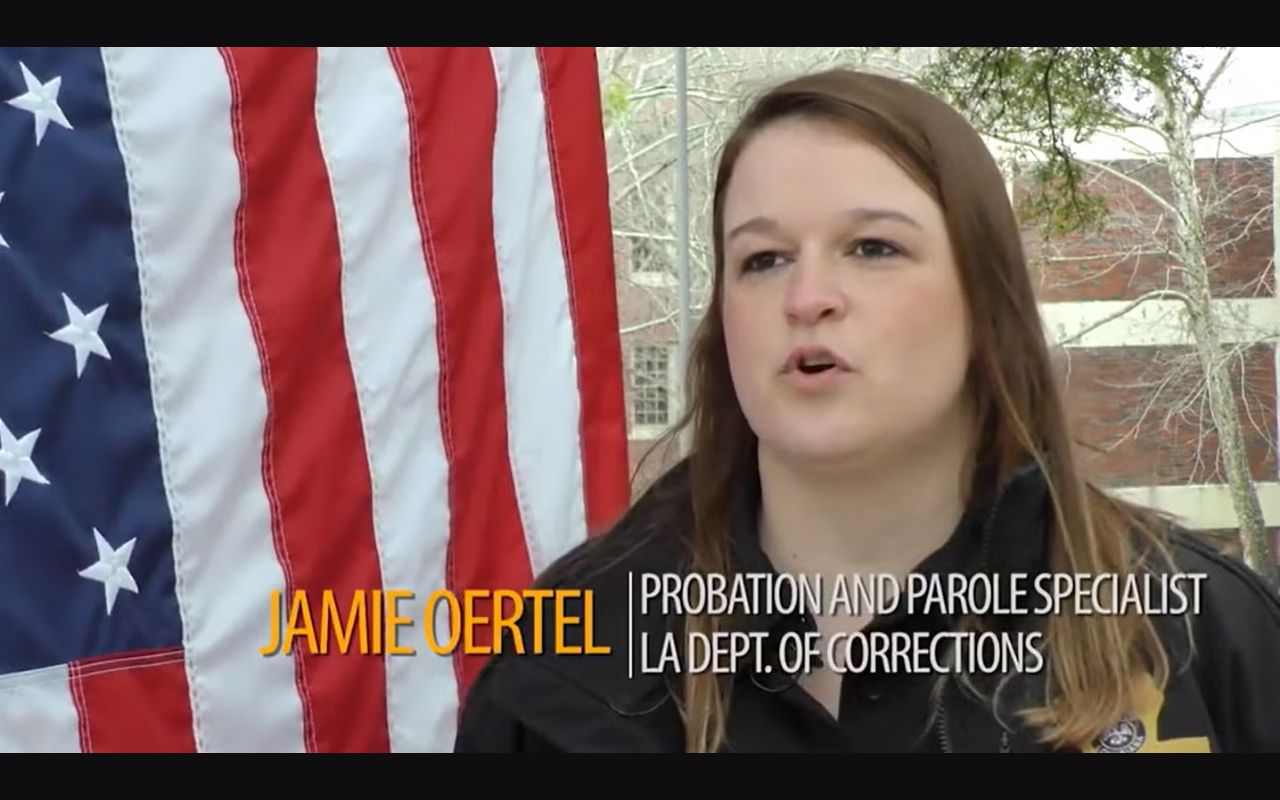
It confirms the state agency that supervises Louisiana probation and parole cases and provides the path to district information.
Orleans Supervision Violations
Conditions are legal duties set by the court, Committee, or supervising authority. A violation allegation does not erase the earlier release. It can lead to a warning, sanction, court action, warrant, or revocation process. Revocation means the authority cancels community supervision and may return the person to custody under the governing order. The outcome must be checked in the correct record.
An absconder is a person whom the supervising agency alleges failed to remain in contact or comply with supervision. That label is not a finding that the original release was invalid. A court attachment shown in Docket Master also is not the same as a final parole revocation. Verify an alleged warrant through the issuing court or law-enforcement agency, then confirm any parole action in Committee records. A new custody event may appear in VINE, but notification data should be matched with the court or custodian record.
Note: Separate the original Orleans release event, the alleged violation, the warrant or attachment, and the final revocation decision.
Orleans Parole Decision Records
Louisiana's Committee on Parole publishes hearing dockets or calendars and meeting information. The calendar is set by hearing date, not by an Orleans-only list. A docket shows that consideration was scheduled. It does not establish that parole was granted or that the person left custody that day. Cases may be continued or removed, so later minutes and results matter.
Published outcomes can include granted, denied, deferred, continued, or rescinded action. Pre-release terms, paperwork, detainers, and effective dates can delay or prevent physical release even after a grant. For an Orleans Parish person, search the docket by name or DPS&C number when the format permits, read the later decision record, and then check DPS&C status. The manifest image below shows the official Pardons and Parole landing page.
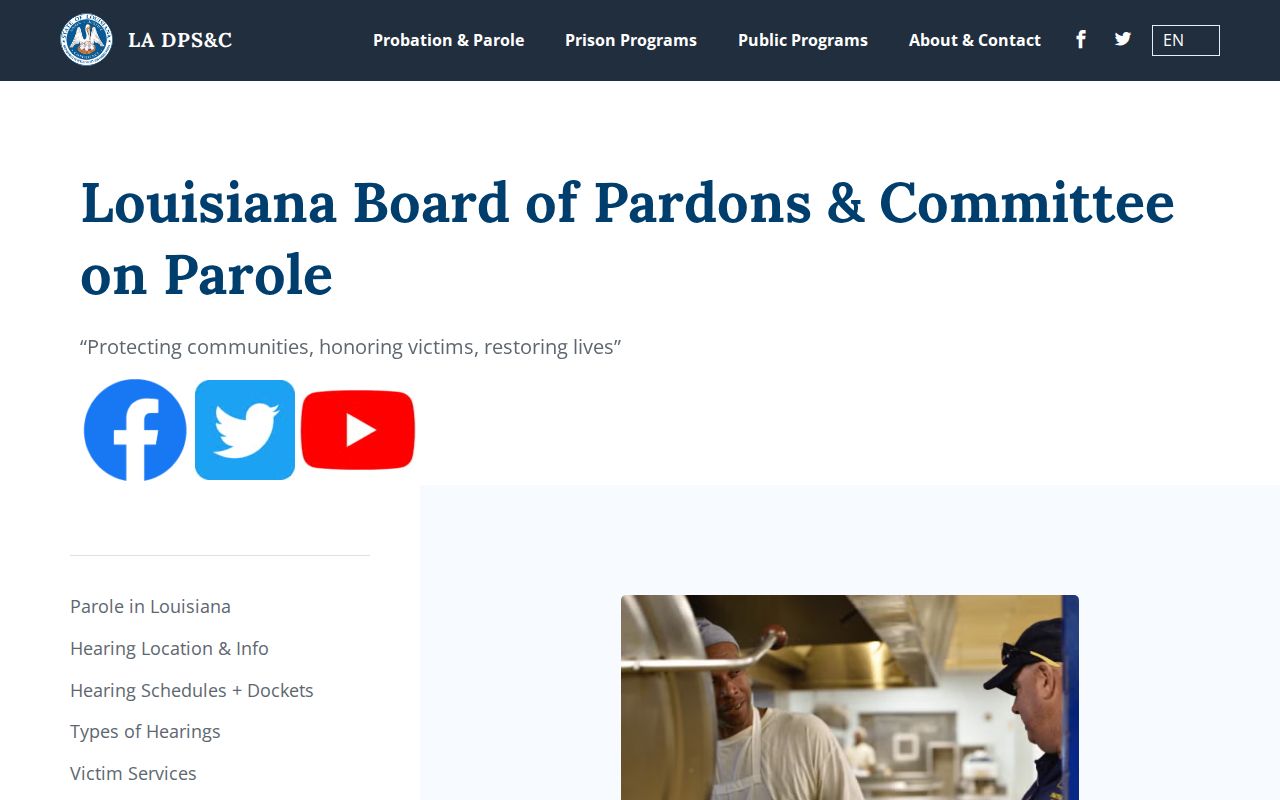
The page is the proper state source for calendars, policies, and Committee records. The actual Orleans release still needs separate confirmation.
Offense date can also control whether parole is legally available. R.S. 15:574.22 generally bars parole for a person committed to DPS&C for an offense committed on or after August 1, 2024 unless a category listed in R.S. 15:574.4 applies. Earlier cases can involve different percentage rules and exclusions based on violence, offense history, sentence length, or other statutory facts. The Committee and DPS&C must apply the current law to the full record. A rough percentage is not a safe substitute.
Orleans Reentry After Release
The City of New Orleans adds a local coordination layer after custody status has been verified. The official Criminal Justice Council includes the New Orleans Reentry Task Force and links prisoner-release resource material. This is a bridge among agencies and community providers. It is not a jail roster, parole database, or source for a supervision decision.
Use OPSO, the court, DPS&C, and Committee records first to establish what happened. Then use the city resource for return-to-community navigation. This order avoids treating service coordination as proof that a person was released or is under parole or probation. City material also describes transition and behavioral-health discharge planning, but a public resource link cannot establish an individual's participation or eligibility.
Orleans Supervision Discharge Records
Release from jail and discharge from supervision are separate events. A probation-termination minute entry can show that the court ended or satisfied an Orleans probation term. A parole discharge belongs in DPS&C or Committee records. When a person was released early through diminution, R.S. 15:571.5 may keep the person under parole-like supervision through the original full-term date.
Request the narrow record that answers the question. Under R.S. 15:574.12(G), certain general corrections information is public, including sentence and discharge information, even though broad prison and parole working files remain confidential. Ask DPS&C for the releasable discharge date and the type of discharge. For court probation, ask the Orleans Clerk for the termination or satisfaction entry.
Use the event labels as written. “Released” may mean release from a facility while supervision continues. “Discharged” may refer to the end of a specific custody phase or the full sentence, depending on the record. A probation satisfaction entry is a court event. A parole discharge is a corrections event. When another case exists, one term can end while another court or agency still exercises control.
The full Orleans Parish release transaction and court-confirmation path is covered on the released-inmate search home page. Match that custody record with the supervision discharge record so the two events are not collapsed into one.